Although “All Quiet on the Western Front” by Erich Maria Remarque claims to be a war novel, it is more of a psychological train ride through Paul Baumer’s brain. As the novel progresses, the gruesome imagery and truth behind the war are revealed. War is not commenced when two nations have a dispute, instead, he soon realizes that it is the powerful leaders who decide what is best for the country as a whole, this is evident towards the end of the text when Paul watches the members of the Russian prison, realizing that the reason for their false hatred between the Germans and the Russians is due to the misunderstanding that they don’t really know what they are fighting for.
This book changes the readers perception of war because of the glorification of it, which is a prominent theme in the novel. This is clearly expressed when Paul visits a hospital with Kropp, who gets wounded and develops a fever, in which Paul observes, “A hospital alone shows what war is.” (266). This is because the glorification of war due to nationalistic governments such as his own, attempt to negate the downsides of war through propaganda. For example, most countries used to have recruiting posters to promote people joining the army featuring a cheesy line of text and a jaunty soldier. Furthermore, we are accustomed to war in these modern times due to the fact that it goes on around us all the time, yet we rarely see it through our own eyes.
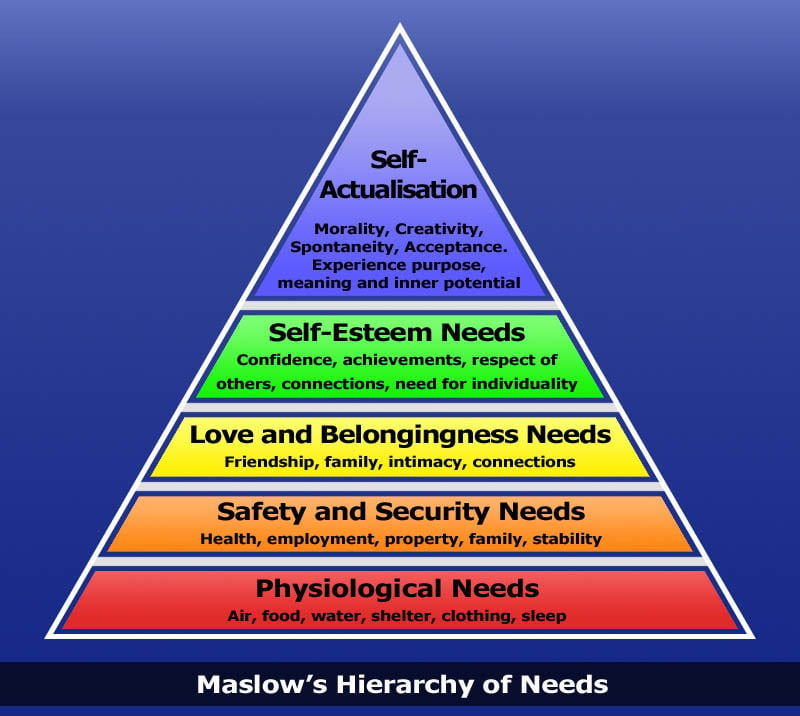
 The novel makes the reader realize how happiness is portrayed in the soldiers of World War 1. Happiness is extremely easy to achieve as a soldier, for them, good food means happiness due to their lack of it. For example, when Katczinsky gets his hands on some haricot beans, a new recruit replies “‘You can’t kid me.’” (36) in disbelief due to good foods rarity during the war. Their happiness comes from the achieving of layers of Maslow's Hierarchy of Needs, a pyramid Thanks To Genius.com displaying the needs of a human being. On the first layer, we have physiological needs, like air, food, water, shelter, clothing, and sleep, which the soldiers do have, but the second layer, safety and security needs, the
soldiers begin to lack, and the higher up the pyramid you go the more nonexistent these needs become for Paul and his friends. The only time when Paul achieves the third layer of the hierarchy of needs is when he catches and cooks geese with Kat, in which he states “We don't talk much, but I believe we have a complete communion with one another than even lovers have.”. This surprises the reader because of how much joy he gets from eating poorly cooked goose with a friend in silence.
War provides no benefits to an individuals happiness, and can even eliminate some of the needs from the hierarchy of needs. A good example of this is when Paul heads home and [He] find[s] [he] do[es] not belong here anymore, it is a foreign world.” (168). His time at the front has scarred him in a way in which would be impossible for him to recover, as he soon states “...a sense of strangeness will not leave me, I can find nothing of myself in all these things. There is my mother, there is my sister, there is my case of butterflies, and there is the mahogany piano – but I am not myself there. There is a distance, a veil between us.” (160). This demonstrates that he does not belong at home anymore, and he isn’t truly happy about seeing his family when he knows he should have been.
To conclude this post, this novel attempts to address the misconception of war due to its glorification, and thoroughly succeeds through the idea of a soldiers happiness going through a war.

No comments:
Post a Comment